
Fiberglass mesh manufacturers generally published EIFS sales information until 1995 as illustrated below:
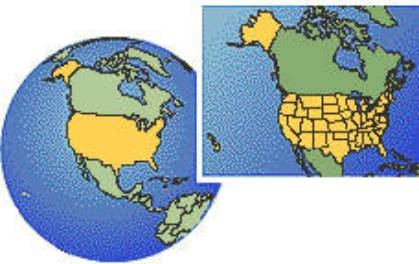
Market Size in the USA in 1995 was about 250,000,000 Sq. Ft.
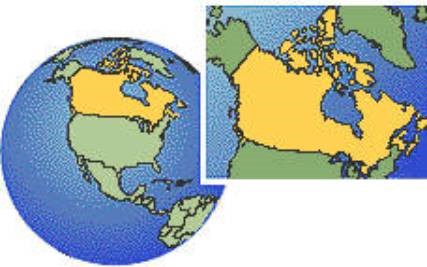
Market Size in Canada in 1995 was about 15,000,000 Sq. Ft.
EIFS USA
Market Growth
Dryvit started to market EIFS in N.America in 1969. In the late
70’s, other manufacturers entered this market. After 1990 there was a great deal of consolidation of manufacturers. While there were about 14 manufacturers in the ’80’s, the number in 2016 is more like 6 EIFS manufacturers. Most merged or were acquired by larger manufacturers.
Seam Procedure For Mesh
11oz & Lower
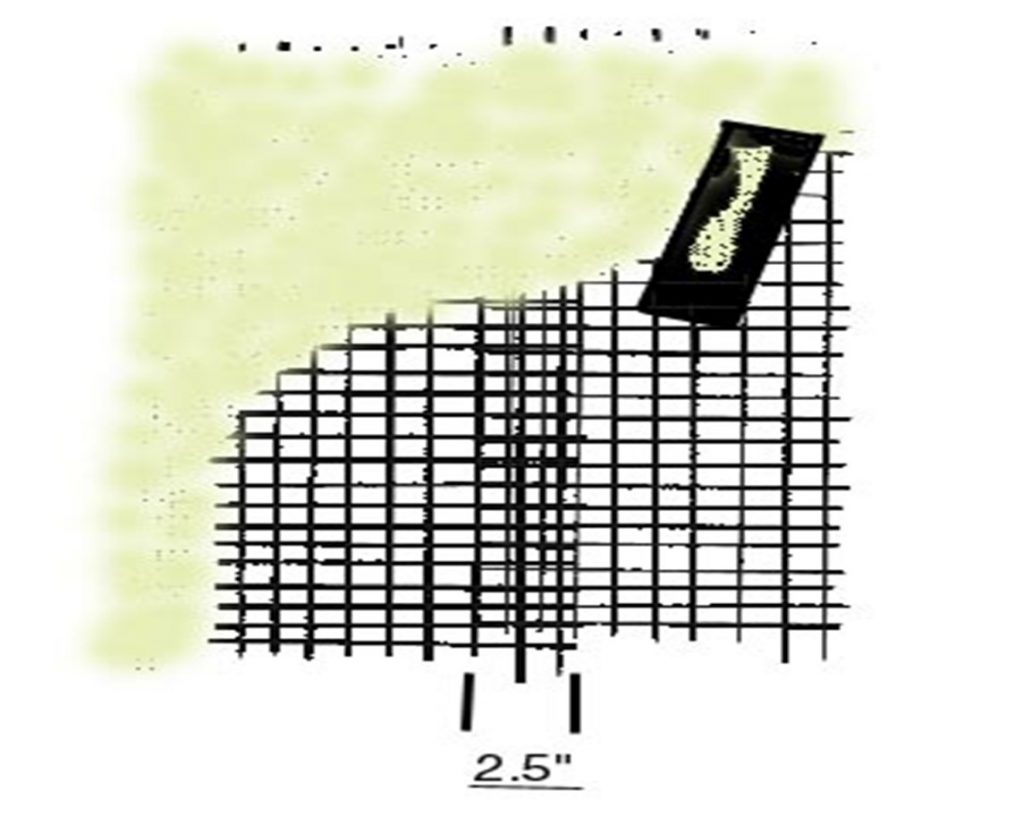
Overlap Minimum of 2.5”
| Mesh Thickness | ||
| 4 oz. | 0.42 mm | 0.0107″ |
| 6 oz. | 0.45 mm | 0.0110″ |
| 11 oz. | 0.74 mm | 0.0190″ |
Seam Procedure 15+ 20 oz. Mesh
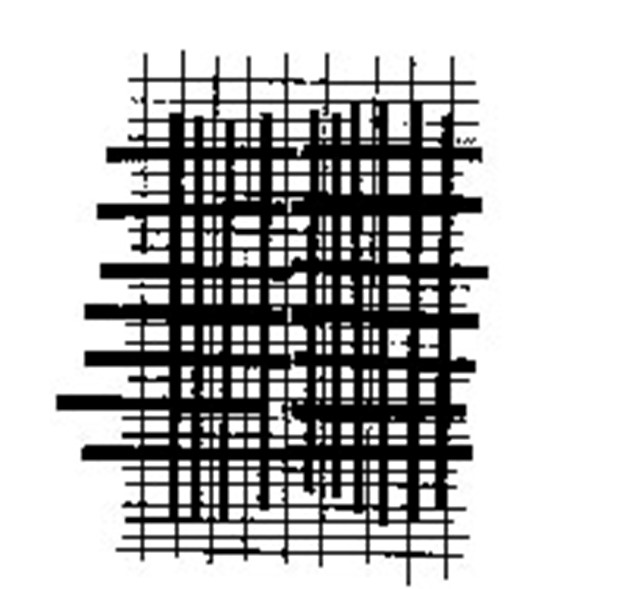
Butt Join and Completely Cover with 4 oz. Mesh
| Mesh Thickness | ||
| 15 oz. | 1.03 mm | 0.026″ |
| 20 oz. | 1.19 mm | 0.030″ |
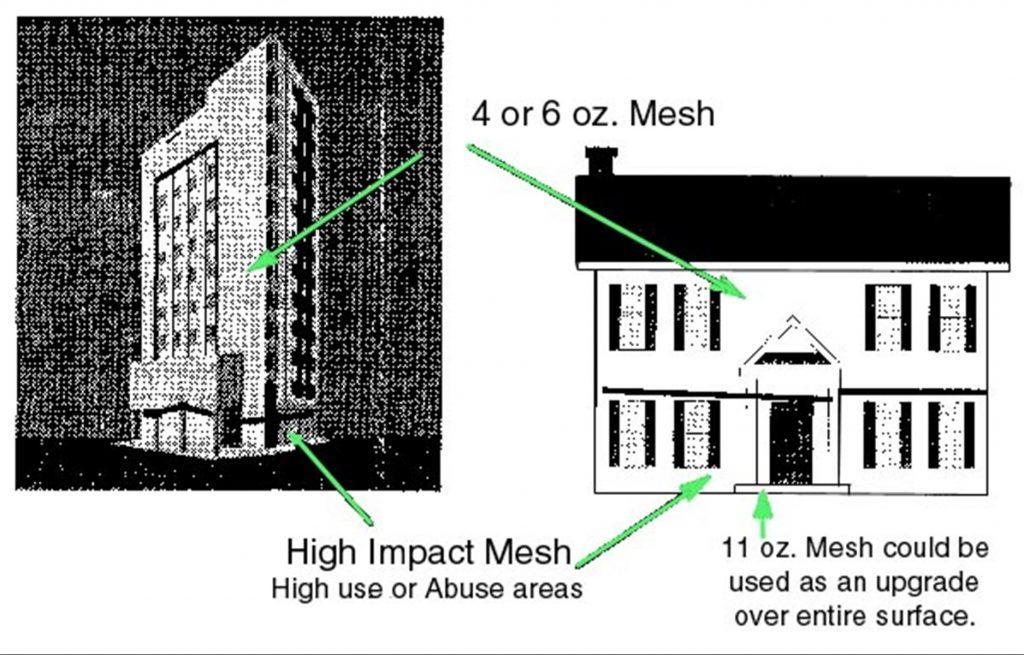
Recommended Mesh Use
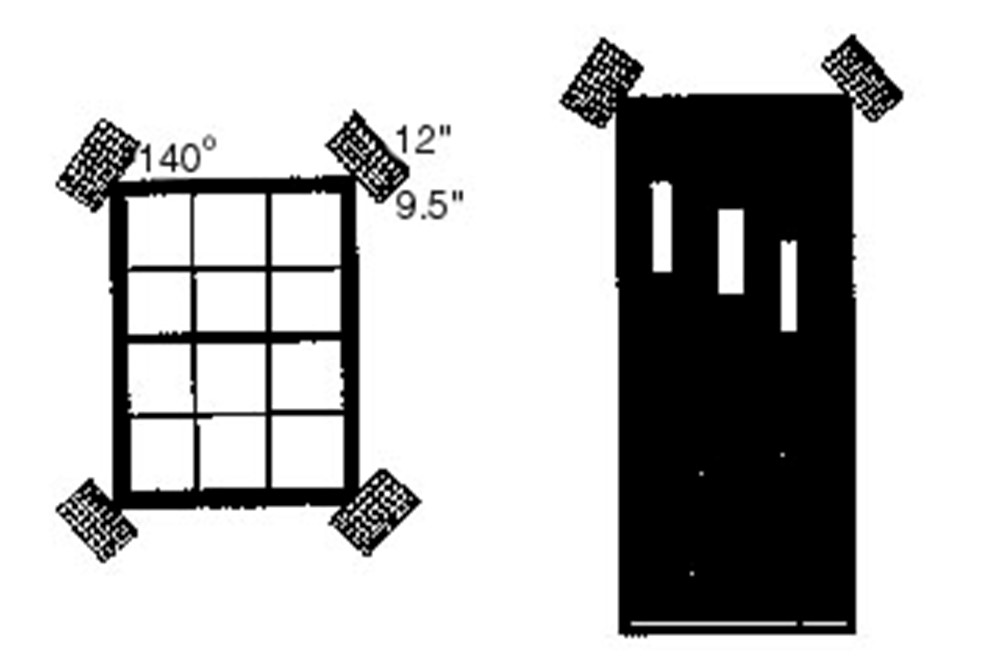
Use of 9.5″ Detail Mesh:
Diagonal mesh at fenestration corners protects against cracking. Required size of diagonals
is 9.5″ X 12″
Typical Mesh Weights
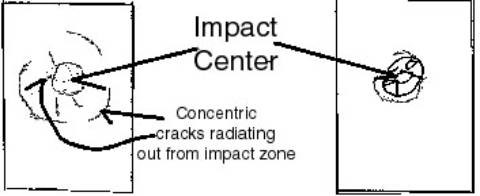
Impact Ranges (Bayex Test Method)*
 |
Oz/yd^2 | Inch-Lbs | |||
| 4 | 25-35 | Std. Impact | |||
| 6 | 35-40 | Std. Impact | |||
| 11 | 75-90 | Intermediate Impact | |||
| 15 | 180-220 | High Impact | 20 | 230-240+ | Ultra-High Impact |
* Modified EIMA method…Gardner impact. Impact head.. 0.5in. semi spherical with 1/8” flat on bottom, which is still to preferred test method.
Synthetic mesh typically made of polypropylene or nylon, is generally NOT APPROVED BY EIFS MANUFACTURERS. (revised- as of: 2001, 2010, 2016)
Other Comparisons
-E-108 fire test: glass required to pass Polypropylene burns and melts away. Also adds to the total fuel load on the wall. Elongation of fiberglass of 2-4% to break is more equivalent to that of cemititious coatings. Therefore fiberglass takes up load at the same rate as the coating, thus providing optimal reinforcement.
Synthetic reinforcement shows elongation at break of 12 to 15%. Therefore it has barely begun to contribute at the time that the coating is at maximum elongation.
Mesh is required on all EIFS systems. This is the internal reinforcement for impact resistance and tensile strength.
Learn these mesh requirements:
- Lay and store mesh rolls flat. Standing on end can bend the edge and cause problems during application.
- Cool and dry storage is better than hot and humid.
- Do not abuse mesh. Laying it on or dragging it over construction materials, such as aggregate or rough ground is not advisable.
- If a wrinkle forms in the mesh as it is being trowelled on the wall, do not slit this wrinkle and simply continue. Any slit or cut in the mesh will become a crack very quickly. Pull the mesh back and re-lay the mesh to avoid this problem. If the mesh becomes cut, cover the damaged area with another piece of mesh that overlaps the cut a minimum of 2.5″ on all sides.
- Coating Cement Board or ISO board… Typically, only the joints are taped and the coating applied over the entire surface. Many times these joints are visible. To avoid this problem, apply mesh to the entire surface, as you would in a typical EIFS application.
- If you need to cut mesh in the field while it is in roll form, a double serrated toothless blade works best.
EIFS Mesh Color Guide
Partial List of manufacturers mesh colors
Dryvit – Blue
Damtite – Light Blue (Sky)
Finestone – Red or White
HB Fuller – White
MasterWall – White
Parex – White
Pleko – White or Off White
R-Wall* – Green or Yellow
RetroTek – White
Senergy – White
Sonneborn – Orange
Sto – Yellow
Tec – White
Notes: Mesh color alone is not necessarily sufficient to identify the manufacturer. In many cases, an applicator may have mixed components from two or more manufacturers and, as the table indicates, some colors are used by more than one manufacturer.
*R-Wall was purchased by Sto in 1994. Prior to this, R-Wall used green mesh. During the transition, green or yellow may have been used. After the transitional period, yellow was used.