
Adhesives General Descriptions
EIFS can be installed on a wide variety of substrates with several methods of attachment. While adhesive attachment has generally been the most common
method there are a variety of combinations and methods to achieve the successful attachment of the system to virtually any substrate.
To anchor the system, adhesives are most often used. Mechanical fasteners are recommended when the substrate type or condition prevents adhesion to the substrate in question. Attachments are designed to resist wind load, gravity, and the effects of thermal movement.
Types of PB EIFS Adhesives
There are four types of PB EIFS adhesives:
- Traditional wet base that, when mixed with cement forms the adhesive material.
- Dry mix cement with synthetic modifiers included. Only add water.
- Non cementitious synthetic adhesive. Traditionally wet based pail product.
- Special proprietary adhesives and primers for coated surfaces and others. Can be either wet or dry based product
Types of Cementitious Adhesives
There are two types of cementitious adhesives:
- Pail or wet product mixed with (Type I or Type I & II) Portland cement in varying ratios by weight of adhesive to cement.
- Dry or bagged factory blended dry powder product which requires the addition of clean potable water only.
General Comment
Cement based adhesives are cured by the chemical reaction of the water, polymers and cement. They are normally light gray in color. They are used for adhering EPS to masonry, concrete and specific types of sheathing substrates. In most cases, they also act as a base coat material over EPS and Polyisocyanurate insulation boards to embed the reinforcing mesh.
Type PB Synthetic Adhesives
There are two types of PB synthetic products generally available in the industry:
- Synthetic Adhesive/Base Coat: Ready mixed 100% polymer based product which acts as both an adhesive and a base coat material.
-
- Synthetic Adhesive Only: Ready mixed 100% polymer based product. Used only as an adhesive for applying EPS to wood based sheathings. Can also be used for gypsum sheathings and fiber faced gypsum sheathings. It also has other specific adhesion qualities under certain conditions. The system manufacturer should be consulted.
General Comment
Synthetic adhesives cure by the evaporation of water and thus, curing is affected by temperature and humidity. They are normally off white in color.
All manufacturers supply cementitious adhesives and base coats. Most supply synthetic as well and a few supply special adhesives for coated surfaces, wood-based sheathing, etc. It is imperative that the correct adhesive be used with each substrate. Contact the manufacturer for specific instructions and DO NOT mix
manufacturers materials or instructions as this will most certainly void any warranty available.
Adhesives, Base Coat and Finishes PowerPoint Presentation
Please click on the link below to open the presentation.
Adhesives, Base Coat and Finishes
Type PB Application Adhesives General
Adhesive Patterns
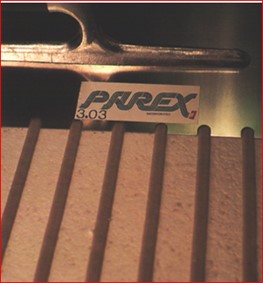
The Notched Trowel Method – in which a notched or grooved trowel is used to apply the adhesive to the entire surface of the insulation board. The size and pattern of the notches are specified by the manufacturer. This method works well with flatter sheathed substrates and is usually a code requirement for installation of the EPS board to sheathed type substrates.
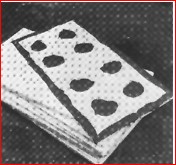
The Ribbon and Dab Method is an old, rarely used method of application where a ribbon of adhesive is placed around the entire perimeter of the insulation board and adhesive dabs are placed in the field of the EPS. This method works best and is allowed on masonry type substrates only.
Weather and Environmental Conditions
-
- Application of wet materials shall not take place if there is precipitation unless appropriate protection is provided. Materials should be stored inside in a dry place that is warmer than 45 degrees F and cooler than 100 degrees F.
- Installation of wet materials shall be at an ambient temperature of 40 degrees Fahrenheit and rising and shall be maintained above 40 degrees Farenheit for a minimum of 24 hours after application.
- Allow the adhesive to form a positive bond. A minimum of 24 hours or longer as required by conditions shall elapse prior to the rasping of the insulation board. Failure to allow the adhesive to form a strong bond before rasping can lead to the breaking of the adhesive bond between the insulation board and the substrate, causing the EPS to shift or delaminate.
Base Coats Type PB – General Description
Base Coats create the barrier against weather and strengthen the lamina against impact and thermal movement, and are used to imbed the reinforcing mesh to the EPS.
In EIFS the base coat performs one of the most critical functions of the system. It must have the physical and weather resistant properties required for a durable exterior cladding. The base coat provides the tensile strength, impact resistance and water resistance for the system. The durability of an EIFS System is primarily dependent on the properties of the base coat material and its application.
EIFS Type PB Base Coats
There are 3 types of PB base coats generally available in the industry:
-
- Cementitious Base Coat Pail is a product which consists of a wet material, which is mixed with Type I or II Portland cement in varying ratios by weight of adhesive to cement.
- Cementitious Base Coat Dry is a product that consists of a factory-blended dry powder product to which only water is added.
- Synthetic Base Coat Pail is a product that is a factory-blended ready mixed 100% polymer which comes ready to use straight from the factory.
Application Type PB Base Coats
Before beginning the installation of the base coat material, check the application of the insulation board to make sure it conforms with the installation instructions. It should be flat, all gaps in the insulation board should be filled with slivers of insulation board, the insulation board should have been completely rasped, etc.
The base coat is usually applied by hand with a trowel. The proper thickness of the base coat material is crucial. It must be thick enough to fully embed the reinforcing mesh.
Proper Base Coat Thickness is important because it:
-
-
- Improves the durability of the reinforcing mesh.
- Increases the impact resistance of the lamina.
- Provides a smooth surface on which to apply the finish.
- Affects the water resistance of the lamina.
-
Base coat thickness in the EIFS PB classification can range from a minimum of l/l6″ to 3/32″ or thicker depending upon the reinforcement requirements. If you can see the color of the reinforcing mesh, or if the base coat does not completely fill the weave, the base coat is too thin.
Inspection Considerations
Inspection tips:
-
- Terminations must be protected by backwrapping, trim accessories or seal tapes. At the perimeter of the EIFS system (at windows, doors, sealant joints, etc.,) the base coat material is brought around the edge of the insulation board which completes the application step called backwrapping or terminating. It is imperative that all terminations of the system be encapsulated by the base coat reinforced lamina or aproved or specified accessories in order to protect the edge of the insulation board. This reinforced base coat lamina is required to apply the sealants to and to protect the system.
- Aesthetic grooves or reveals, inside and outside corners must have mesh continuous past these area and be pre-meshed.
- Environmental conditions and application coordination of general installation requirement should be met.
Standard PB Base Coat Application Procedure
- All base coat products are applied to the face of the insulation board in the same manner. Using a stainless steel trowel apply an even layer of base coat onto the surface of the insulation board in an area slightly larger than the width of the reinforcing fabric.
- The reinforcing mesh is immediately placed into the wet base coat material, troweling it in from the center and outward to its edges. This method keeps the fabric laying flat, ensuring consistent embedment into the base coat.
- In the event that any portion of the embedded mesh color is still visible, apply a second skim coat. Depending upon the manufacturer some will request that no mesh pattern be visible.
- The installation progresses by applying base coat similarly in areas adjacent to the previous application. Care should be taken to overlap the standard reinforcing mesh a minimum of 2 l/2″ at all meeting ends and edges as the application progresses.
- The base coat application should be smooth and free of trowel marks or wrinkles in the fabric. The reinforcing fabric color must not be visible anywhere. Allow a minimum drying time of 24 hours or longer, depending on conditions, before applying finish coatings.
EIFS Type PM Base Coats
Normally one of the following types of base coat is utilized in the PM class EIFS. This base coat is cementitious in composition and can be either of these two types:
Cementitious PM Field Mixed – Usually consists of wet acrylic binder to which a blend of sand, cement, water and fiberglass fibers are all added together to form a base coat.
Cementitious PM Dry – Consists of a factory blended dry power product to which only water is added.
Base coat thickness in the PM classification can range from 3/32″ to 3/8″ or more. A typically distinct difference in PM class systems is the application of the base coat to a reinforcement mesh that is already mechanically fastened in place. However, there are two systems in the marketplace that have second generation base coats that can be applied directly to a prepared extruded polystyrene.
Application Type PM Base Coats (typical)
Follow these application steps:
-
- The base coat should be mixed according to manufacturer’s instructions.
- Using a stainless steel trowel, tightly trowel (approx. l/8″ thick) the first application of the mixed base coat over the entire surface of the mechanically attached reinforcing and insulation board.
- Immediately trowel a second layer of the mixed base coat and level to achieve a full base coat thickness of approximately l/4 to 3/8 of an inch. The final dry thickness should be as specified by the manufacturer.
- The base coat application should be smooth and free of trowel marks with no visible sign of the reinforcing.
- The base coat application shall be dry and hard prior to the application of the finish coat.